Downtown Tulsa doesn't stay calm on a BOK Center event night. The moment 17,000 Oilers fans or a sold-out concert crowd starts pouring onto South Denver Avenue, the streets around 2nd Street and Frisco Avenue turn into the kind of gridlock that takes 30–45 minutes to clear — sometimes longer when a center-stage show fills all 19,199 seats. The private lots drain slowly, the rideshare zone on 1st Street backs up fast, and the free meters that were open at 4:30 PM are long gone by the time the opener hits.
A Tulsa charter bus rental sidesteps all of it: one vehicle, one drop at the door, one pickup window after the show — and no one in your group circling a 2nd Street garage at 11 PM.
This guide covers exactly how group transportation works at BOK Center (200 South Denver Avenue, Tulsa, OK 74103) — the official passenger drop-off zone, where a full-size bus can stage versus where private cars queue, what happens to the 3rd Street and Frisco Avenue grid when a major event lets out, and how to match the right vehicle to your group's size and plan. Every logistical detail comes from the venue's own published policies and City of Tulsa event permit filings. Call 539-999-2820 any time to compare vehicles and check pricing, or read through for the full operational picture first.
Why Groups Rent a Party Bus or Charter Bus to BOK Center
The fundamental challenge at BOK Center is simple: the venue does not own or operate any parking. That's confirmed on the official BOK Center FAQ page — the "over 9,000 available parking spots within a five-minute walk" that the venue references are all privately operated, with rates set by each individual lot. On a sold-out Oilers playoff night or a major concert, those same 9,000 spots are competing for the same 17,000-plus fans, private lots adjust prices upward for event demand, and the free downtown meters fill long before puck drop.
There's no onsite parking option to fall back on, which means every car in your group is solving that problem independently.
A Tulsa party bus or charter bus rental collapses that whole problem into one line item. One vehicle covers the group, drops everyone curbside at the Main Entrance on 3rd Street, and stages nearby for the pickup after the show. No splitting the party across three different garages, no one missing the opening act because they couldn't find a spot on Frisco, no post-event surge fare when everyone in Tulsa orders a rideshare at the same moment.
For a group of 20 or more, the math usually tips decisively toward the bus once you total up per-car parking, gas, and the coordination headache of keeping a large party together across downtown's one-way grid. Explore the full Tulsa group transportation services page to see how these trips get structured end-to-end.
Charter Bus & Party Bus Drop-Off at BOK Center
The official passenger drop-off point at BOK Center — published directly on the venue's own accessibility page — is West 3rd Street between Denver Avenue and Frisco Avenue, with entry through the Main Entrance. That's where your group unloads and walks straight in from curbside. The rideshare zone runs a different line: per the BOK Center parking and rideshare page, Lyft (the venue's official rideshare partner) and Uber pick up and drop off at the designated Rideshare Zone on 1st Street, between Denver and Cheyenne — one block south of the 3rd Street entrance, pointed away from the Main Entrance.
That one-block gap is invisible before the event and very visible after it. On the way in, the 1st Street rideshare zone is workable. On the way out, after 17,000-plus people exit simultaneously and every rideshare app within two miles surges, that zone becomes a bottleneck — long waits, high fares, and a crowded curb that doesn't move as quickly as it looks on the map.
A private bus picks your group up on 3rd Street at an arranged window instead, bypassing the staging queue entirely.
Where a Full-Size Bus Stages vs. Where Private Cars Queue
For events drawing more than 5,000 ticketed attendees, City of Tulsa event permit filings require 3rd Street between Denver Avenue and Frisco Avenue to be closed beginning at 5:30 PM on event day, remaining shut until roughly 90 minutes after the event concludes. That closure is specifically for event support — limousine staging and controlled pedestrian access to the Main Entrance. A private charter bus or party bus prearranges its drop-off through that corridor as part of the booking, which is why groups arriving by bus walk from the curbside to the gate while private cars are rerouted around the block.
Frisco Street between 2nd and 3rd is also typically closed during major events, and the south side of 1st Street west of Denver picks up rideshare and support staging. The Tulsa Police Department's Special Events Unit manages these closures and can restrict additional side streets as crowd management requires. In plain terms: the street grid immediately around BOK Center is actively controlled on big event nights, and a party bus or charter bus arriving on a confirmed plan navigates it differently than a private vehicle improvising at 6 PM.
BOK Center Event-Night Street Closures: The Denver Avenue & 2nd Street Grid
The closure footprint around BOK Center is compact but decisive. 3rd Street between Denver and Frisco is the primary affected corridor — the venue's own drop-off street and main pedestrian staging zone. On event nights with 5,000 or more attendees, it goes to restricted status at 5:30 PM and stays that way into the post-show period.
The TPD's Special Events Unit can also extend restrictions to 2nd Street approaches from the east and adjacent side streets as needed, which means a bus approaching from east downtown — coming off I-244 on a route that uses 2nd Street as a westbound connector — may encounter changed access depending on the size of the event.
The exact closure plan varies by event type and projected attendance, so it doesn't look identical for an Oilers weeknight game at 17,000 and a sold-out center-stage concert at 19,199. For your specific event date, the City of Tulsa's special events calendar lists approved permit applications with road-impact details as they're filed. When you find your vehicle through Tulsapartybuscompany.com, the current approach plan for your event date is confirmed in advance — no guessing at a closed intersection the night of the show.
Approaching BOK Center by Charter Bus: Denver Avenue & I-244
BOK Center sits at 200 South Denver Avenue in the core of downtown Tulsa's north-south grid. The most direct approach for buses coming from the east — including groups originating at or near Tulsa International Airport — is via I-244 West to Exit 4C, then approximately 0.7 miles south on South Denver Avenue to the venue. Denver Avenue is a main downtown arterial that handles commercial traffic without restriction, so a full-size charter bus on that run is standard.
The variable is timing: on event nights, the southbound blocks of Denver Avenue immediately north of the arena start to congest well before the show begins as arriving traffic, pedestrians, and event staff all converge on the same half-mile stretch.
Groups coming from south Tulsa on US-75 North merge onto I-244 West into downtown and use the same Denver Avenue exit. Groups arriving from west Tulsa on I-44 or US-412 enter I-244 heading east and pick up the same exit. The 2nd Street corridor functions as a parallel east-west option — buses coming from hotels or pickup points east of downtown sometimes approach via 2nd Street westbound before turning north or south onto Denver or Frisco — but during large events, 2nd Street access near Frisco is subject to the closure footprint described above.
Plan your arrival window accordingly: clearing the area 50–60 minutes before doors is meaningfully smoother than arriving 20 minutes out on a sold-out night.
Post-Event Gridlock at BOK Center: What to Expect After the Final Whistle
The exit from BOK Center is where most groups wish they'd planned better. When 17,000–19,000 people try to leave a compact downtown arena at the same moment, Denver Avenue backs up north and south of the venue as every private lot within five blocks tries to empty simultaneously. The Rideshare Zone on 1st Street between Denver and Cheyenne turns into a pinch point fast — Lyft and Uber queue up, surge pricing activates immediately post-event, and wait times for large groups using the same app on the same block can stretch to 20 minutes or more.
Groups who parked in the 2nd Street garages face an exit queue that dumps onto the same few blocks of downtown that are simultaneously managing pedestrian crossing traffic and TPD event egress control.
A private bus staged for a post-event pickup window skips all of that. You set the window when you book — 30 minutes after doors, 45 minutes, whatever your group's pace calls for — and the bus is positioned and ready when the group walks out. No surge fare, no garage hunt, no regrouping at a corner where the signal is already backed three lights deep.
For a weeknight Oilers game, the worst of Denver Avenue gridlock typically clears within 30–45 minutes of the buzzer. For a sold-out center-stage concert, plan closer to 45–60 minutes before the egress wave fully settles. Either way, a pre-arranged bus beats waiting for it.
BOK Center Transportation Options: Every Way Groups Arrive
BOK Center is not a stadium surrounded by parking lots — it's a downtown arena where every arrival option comes with trade-offs. Here's an honest look at how the main options compare for a group trip.
| Option | Cost shape | Arrive together? | Drop-off point | Post-event hassle | Best group size |
|---|---|---|---|---|---|
| Private charter bus or party bus | One flat rate, split across the group | Yes — one vehicle, one arrival | Best — 3rd Street Main Entrance | Low — pre-arranged pickup window | 15–56 |
| Rideshare (Lyft/Uber) | Per car, each way + post-event surge | No — multiple cars, multiple ETAs | 1st Street zone, one block from entrance | High — surge pricing, long queue post-show | 1–4 per car |
| Drive & park nearby | Per car + event-rate lot ($10–$20+) | No — group splits across garages | Varies — 1–3 block walk from lot | High — lot exit backs up on Denver/2nd | 1–2 cars |
| Tulsa Transit Aero BRT / City Bus | Per person fare | Only if everyone boards the same run | Denver Avenue Station, across from venue | Low for transit users; service frequency varies | Any size, but no group control |
For a solo attendee or a couple, transit or a rideshare is a perfectly reasonable call — the Tulsa Transit Denver Avenue Station sits directly across from BOK Center at 319 S. Denver and connects to the Aero BRT system and most downtown bus routes. But the moment your party spans more than two or three cars' worth of people, the coordination overhead of separate vehicles — different arrival times, scattered garages, split rideshares, and the post-event scramble to regroup — tips decisively toward one bus. That's the group the rest of this guide is written for.
Tulsa Oilers Game Night vs. Concert Night: Charter Bus Rental for Both
BOK Center runs two distinct modes, and both shape how you plan a group trip. Oilers hockey nights — the team plays a full ECHL regular season at BOK Center, with puck drop typically at 7:05 PM on weeknights and 3:05 PM on weekend afternoons — draw crowds in the 17,000 range on a predictable schedule you can plan months out. The Denver Avenue approach on a Friday Oilers game is manageable compared to a major concert night, and a bus arriving 45 minutes before puck drop usually gets a clean, uncrowded pull-up to 3rd Street.
Winter weather in Tulsa is a real variable for Oilers season (October through April) — when ice covers the streets on a January game night, having the route handled lets your group focus on the game, not the conditions. For fan groups with Oilers gear to haul, a Tulsa sporting event bus rental covers pickup from hotels, tailgate spots, or anywhere the group is gathering pre-game.
Concert nights run the full range of demand: from a partial-house end-stage setup at 13,644 to a center-stage sellout at the full 19,199 capacity. The biggest shows generate the most aggressive closure footprint on 3rd Street and Frisco, the longest post-event egress on Denver Avenue, and the steepest rideshare surges on 1st Street. When a Thomas Rhett or Marco Antonio Solís tour stop fills the building, the entire corridor from 1st through 3rd Street on Denver and Frisco is in active traffic management mode for 45–60 minutes post-show.
A Tulsa concert party bus rental handles the full night — pickup from wherever your group is gathering pre-show, drop at the 3rd Street entrance, and a pickup window already locked in so no one is standing on a crowded curb at midnight watching surge pricing climb.
Parking Near BOK Center: What the Group in Cars Is Up Against
BOK Center's FAQ is direct: the venue does not own or operate parking facilities. The "over 9,000 spots within a five-minute walk" are all independently operated, which means pricing is set by each lot on each event night with no cap. On-street metered parking in downtown Tulsa runs $1/hour on weekdays and is free after 5 PM — making the curb spots on 2nd Street and Frisco Avenue attractive if your group arrives before the evening rush.
In practice, those free meters are taken by the time a 7 PM event approaches on a busy night, and the 3rd Street closure begins at 5:30 PM for large shows anyway.
The closest structured options are BOK Center Central Parking at 205 W 2nd Street (918.582.6515), which sits directly adjacent to the arena, and the 100 West Garage at 100 W First Street, also within one to two blocks. Private surface lots within two blocks can range from roughly $10 on a low-demand night to $20 or more for a sold-out show, with rates set by each operator independently of the venue. The math for 10 cars at $15 each is $150 — before gas, before the coordination overhead of keeping 40 people together across three different garage exits, and before the post-event wait to exit those same garages.
One 40–56 passenger charter bus eliminates the parking spend entirely and delivers the group directly to the entrance the venue designates for group arrivals.
What Size Bus Fits Your BOK Center Group?
BOK Center draws every kind of group: a corporate suite party of 12, a fan section of 50, a birthday group of 18, a school outing of 45. The right vehicle for each of those is different, and Tulsapartybuscompany.com connects you to a wide variety of options through a large network of bus companies serving Tulsa. Here's how the full vehicle lineup maps to a BOK Center trip.
| Vehicle | Typical seats | Best for | Key features |
|---|---|---|---|
| 14-passenger Sprinter limo | Up to 14 | VIP/suite groups, corporate parties | Premium leather, USB charging, tinted privacy windows |
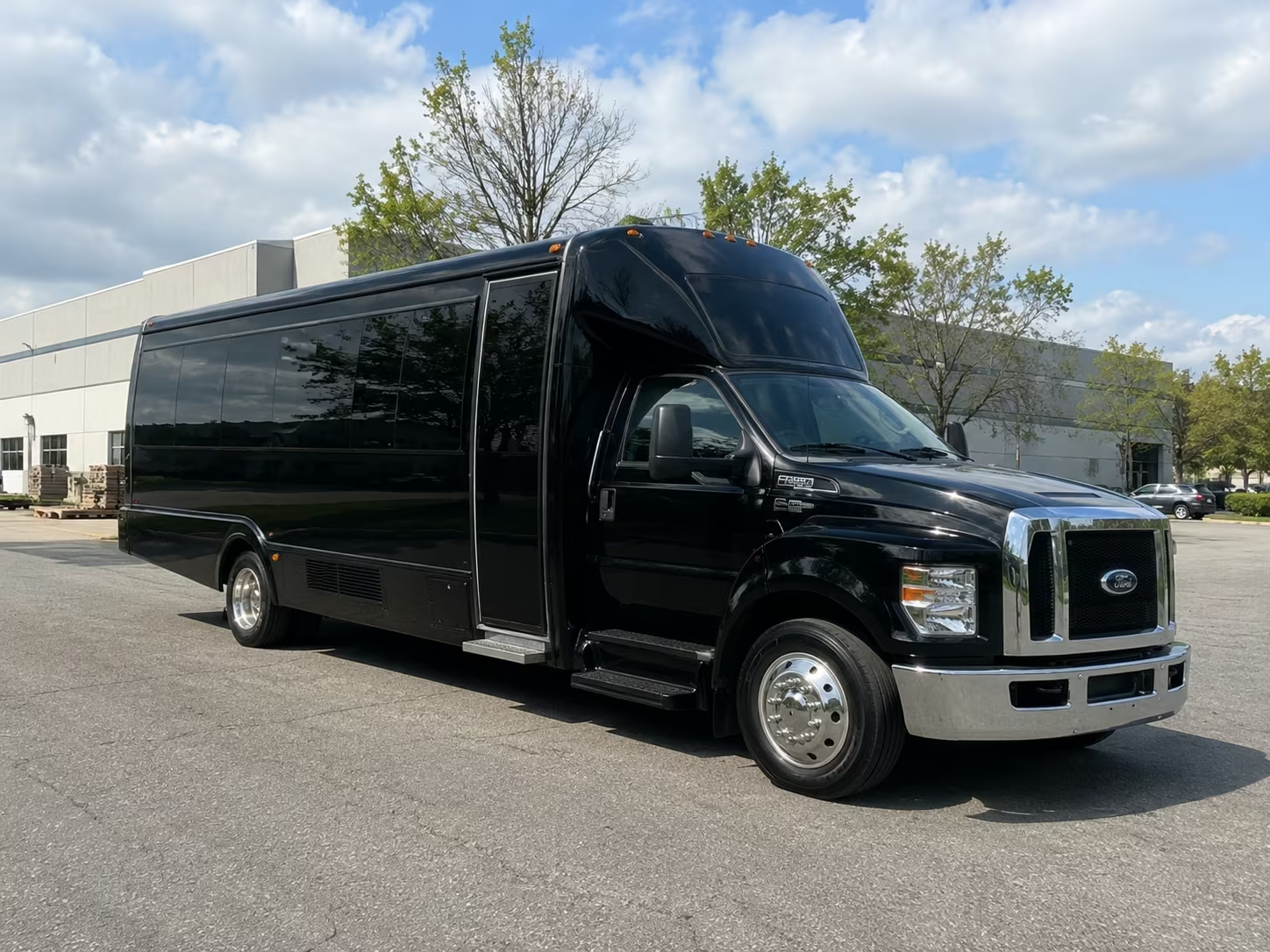
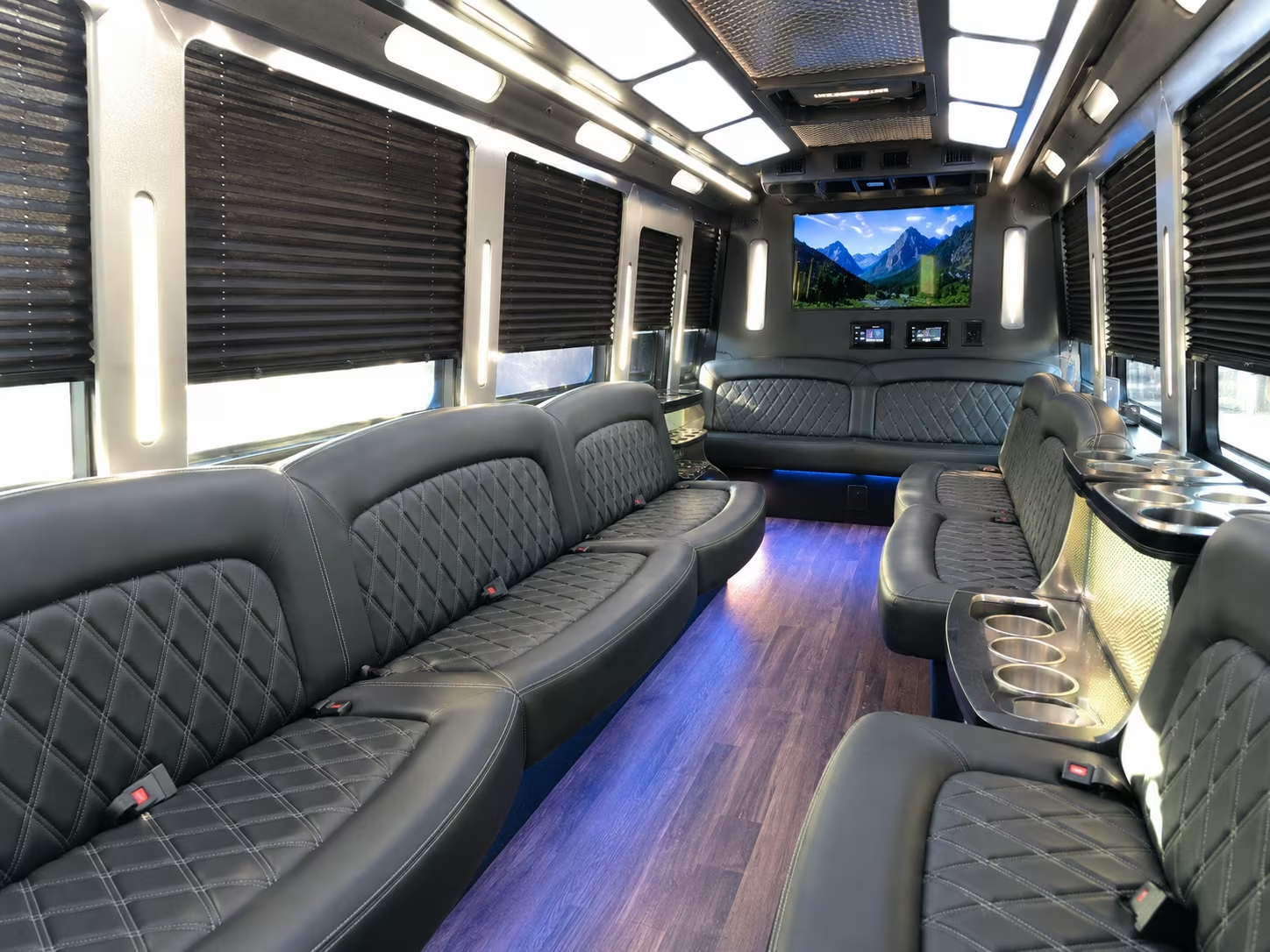
| Party bus (15–50 passengers) | 15–50 | Fan groups, birthday parties, bachelorette groups | Color-changing LED lighting, premium Bluetooth sound system, flat-panel TVs, wraparound seating |
| 15–35 passenger minibus | 15–35 | Mid-size groups, corporate shuttles, mixed groups | Reclining seats, powerful A/C, overhead storage, greater downtown maneuverability |
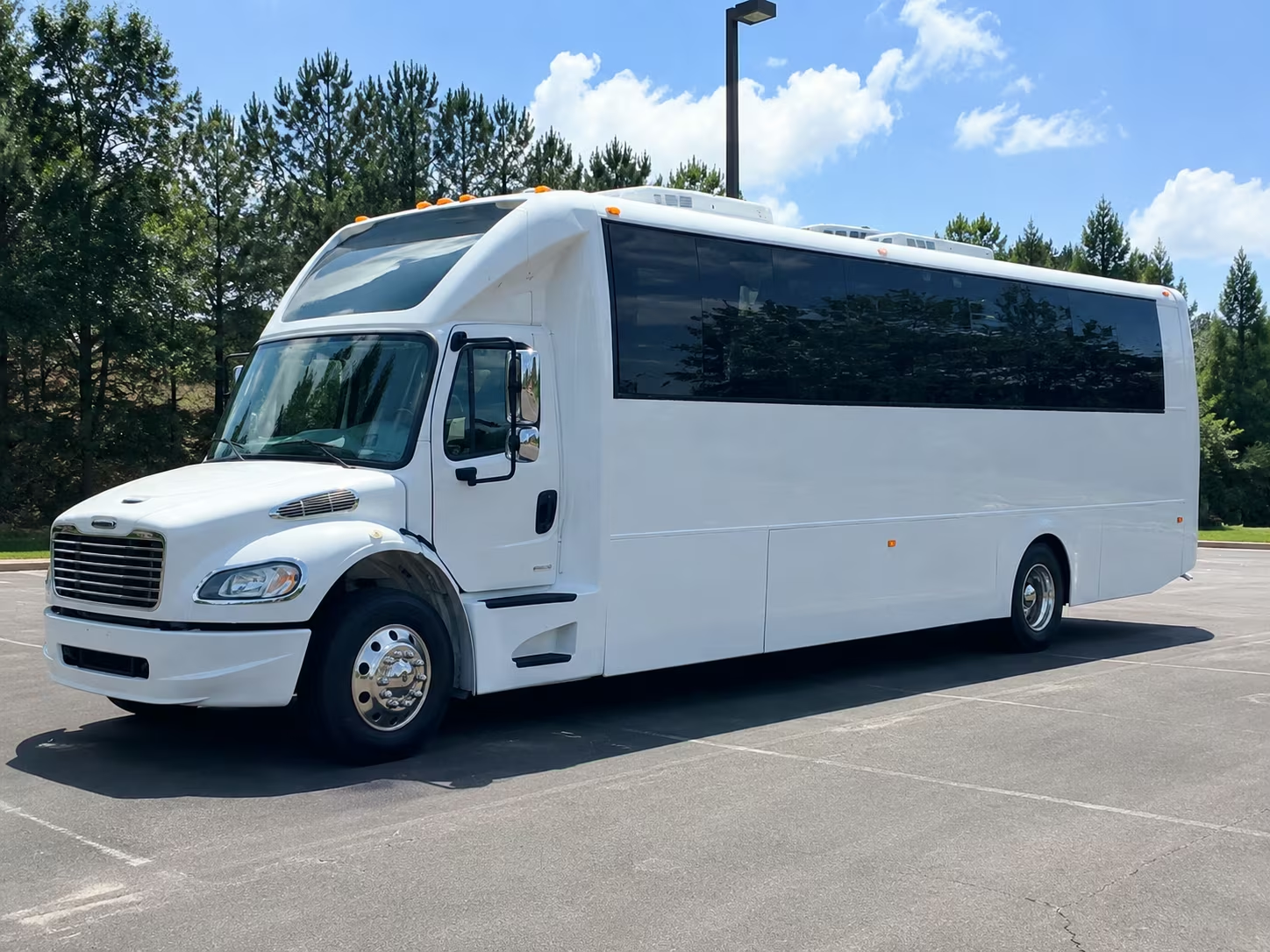
| 40–56 passenger charter bus | Up to 56 | Large fan sections, company outings, church/school groups | Reclining seats, climate control, overhead bins, WiFi, power outlets, onboard restrooms, undercarriage bays |
For a 35-person Oilers fan group riding from a hotel near the BA Expressway, a 30-passenger party bus keeps the pregame energy up on the run into downtown — color-changing LEDs, a premium sound system, and the whole group in one place rather than splitting across five cars. For a 50-person corporate group shuttling to an arena suite from a Midtown hotel, a full-size charter bus with reclining seats and climate control makes the short trip comfortable and gets everyone to the suite level together. For a smaller VIP party of 10–12 visiting from out of town, a Sprinter limo lands at the 3rd Street entrance with a clean, polished arrival that a rideshare can't replicate at any price.
BOK Center Party Bus & Charter Bus Rental Prices in Tulsa
Party bus and charter bus rental prices in Tulsa shift based on vehicle size, how many hours you need it, and your specific event date — a Friday night sold-out concert prices differently than a Tuesday Oilers weekday game. To give you a planning range: a 25-passenger party bus typically runs from about $275–$375 per hour on a weekend evening; a 15–35 passenger minibus from about $200–$275 per hour on a weekend. A full 40–56 passenger charter bus runs from about $200–$350 per hour.
For a typical Oilers game that requires a two-to-three-hour block (pickup, drop-off, post-game return), a 30-passenger party bus might land around $650–$1,100 total for a weekend run — split across 28 people, that's roughly $23–$39 per person, against $15–$20 per car for parking plus whatever the post-midnight surge fare adds up to for a group that size.
These are planning ranges to help you budget — the actual price for your specific date, vehicle, and itinerary comes from comparing real options for your group. Visit the Tulsa party bus prices page for a deeper look at what shapes the quote, or call 539-999-2820 any time. Comparing options through Tulsapartybuscompany.com takes under a minute — no account required, no obligation, just a straight answer on what's available for your date and group size.
Tips for Your BOK Center Visit
- Metal detectors at every entrance — arrive early. BOK Center's FAQ notes that all guests go through walk-through security screening at venue entrances. On a sellout night, security lines back up into the plaza on 3rd Street. Building 45–50 minutes of arrival buffer into your bus drop-off is the difference between a relaxed entry and a rushed one.
- The 3rd Street closure starts at 5:30 PM for major events. Coordinate your bus arrival around this. Pulling up before 5:30 PM on a big concert or Oilers playoff night gets your group to the entrance on an uncontested curb — waiting until 6:15 PM means navigating the restricted zone.
- The rideshare zone is on 1st Street, not 3rd Street. If anyone in your group is mixing a private bus with individual rideshares, make sure they know the Lyft/Uber staging zone is on 1st Street between Denver and Cheyenne — one block south of the Main Entrance, not the same pickup point as the bus.
- Downtown meters are free after 5 PM. Street parking in downtown Tulsa is complimentary on evenings — a useful fact for anyone in your group arriving separately by car. The catch: on event nights those spots fill well before 5 PM, so anyone parking independently should arrive early.
- Check BOK Center's event-specific policies before your trip. Rules on bags, prohibited items, and re-entry can vary by event type. The official BOK Center FAQ covers the current standards — worth a quick look a few days before your event.
- For out-of-town groups flying into TUL, a single pickup at the airport and a direct run downtown is far cleaner than splitting across multiple rideshares on Apache Street with luggage. The Tulsa International Airport shuttle guide covers airport pickup logistics in detail.
Frequently Asked Questions
Where exactly does a charter bus or party bus drop off at BOK Center?
The official passenger drop-off point, per BOK Center's own accessibility page, is West 3rd Street between Denver Avenue and Frisco Avenue, entering through the Main Entrance. This is distinct from the rideshare zone — Lyft and Uber use 1st Street between Denver and Cheyenne, one block south. A private bus drops your group at the main entrance itself rather than routing them through the separate rideshare queue on 1st Street.
Does BOK Center have its own parking?
No. BOK Center states plainly on its FAQ page that it does not own or operate parking. The "over 9,000 spots within a five-minute walk" are all privately operated, with rates set independently by each lot. The closest structured garage is BOK Center Central Parking at 205 W 2nd Street (918.582.6515).
On-street metered parking downtown is free after 5 PM but fills fast on event nights. There is no onsite parking lot that belongs to the venue.
What streets close around BOK Center on major event nights?
For events with 5,000 or more ticket holders, 3rd Street between Denver Avenue and Frisco Avenue closes at approximately 5:30 PM on event day and stays shut until roughly 90 minutes after the event ends. Frisco Street between 2nd and 3rd is also typically closed for event support during large shows. The Tulsa Police Department's Special Events Unit may restrict additional adjacent streets as needed.
Exact closure details vary by event — the City of Tulsa's special events calendar lists permit applications with road-impact details as they're filed.
Where does a full-size charter bus stage while the group is inside BOK Center?
BOK Center does not operate dedicated charter bus parking or staging lots. For large events, the 3rd Street closure reduces general-traffic competition in the drop-off corridor, but the bus isn't assigned a specific waiting lot by the venue. Staging for the duration of the event is coordinated based on the specific event and current street availability — the nearby 2nd Street and Frisco Avenue surface lots and downtown parking network are the working options.
When you find your vehicle through Tulsapartybuscompany.com, staging logistics for your specific event date are confirmed as part of the booking rather than discovered at the venue.
How long does post-event traffic take to clear on Denver Avenue?
For a typical Oilers game (17,000-range crowd), the worst of Denver Avenue gridlock usually clears within 30–45 minutes of the final buzzer. For a sold-out center-stage concert at 19,199 capacity, expect 45–60 minutes or more before the egress wave settles. The Rideshare Zone on 1st Street is most congested in the first 20–30 minutes post-event, when surge pricing is also at its peak.
A private bus with a pre-set pickup window — booked before the event — bypasses the surge entirely and gets your group moving when the window opens, not when the queue clears.
What's the best approach route to BOK Center for a charter bus?
The most direct approach is I-244 West to Exit 4C, then approximately 0.7 miles south on South Denver Avenue to the venue. Denver Avenue is a main downtown arterial built to handle commercial traffic, so a full-size coach on that approach is standard. Groups coming from south Tulsa on US-75 merge onto I-244 West into downtown and take the same exit.
The 2nd Street corridor offers an east-west alternative for groups coming from east downtown or from hotels on that side of the grid, though 2nd Street approaches near Frisco may be impacted by event closures on large-show nights.
Is a party bus or a charter bus better for a Tulsa Oilers game?
Depends on the group's vibe and size. A party bus in the 25–40 passenger range is the pick when the pregame energy on the ride is part of the night — the LED lighting, sound system, and wraparound seating turn the trip into the opener. A minibus or full charter bus is the call when comfort and practicality matter more than atmosphere: reclining seats, overhead storage for gear, climate control for a cold January game night.
For a 50-person group, the charter bus is the only single-vehicle solution. For 15–30 people who want a real pregame experience on a Friday night, the party bus earns its place on the ride downtown.
When should I book a BOK Center bus to get the widest choice of vehicles?
For most Oilers regular-season home games, two to four weeks of lead time is workable. For major concerts — sold-out shows like summer country tours or high-demand touring artists — four to eight weeks out gives you better vehicle selection and a wider range of rates. The BOK Center's event calendar fills in significantly during spring for the fall and winter season.
Once your event date is confirmed, call 539-999-2820 — comparing options through Tulsapartybuscompany.com takes less than a minute and there's no obligation to book on the spot.
How many people can a BOK Center party bus or charter bus hold?
Vehicles available through Tulsapartybuscompany.com's network range from a 14-passenger Sprinter limo up to a 56-passenger coach. 18-passenger and 20-passenger party buses cover smaller groups who want the full event-night atmosphere without paying for seats they don't need. For headcounts above 56, a two-vehicle arrangement is the answer — flag it when you call 539-999-2820 and the options for your specific group size will be compared in the same call.
Book Your BOK Center Bus in Tulsa Today
Whatever brings your group to 200 South Denver Avenue — a Tulsa Oilers home opener, a country concert sellout, a corporate suite night, a birthday group making it a whole event — transportation doesn't have to be the stressful part. Tulsapartybuscompany.com makes it easy to compare party buses, charter buses, minibuses, and Sprinter limos from a large network of bus companies serving Tulsa, check pricing in under a minute, and lock in a vehicle before the good options on your date go. Call 539-999-2820 any time, any day — no account needed, no obligation, and a support team ready to answer questions about your specific event, group size, or route.
Also planning other stops on the same Tulsa trip? The ONEOK Field transportation guide and the Cain's Ballroom guide cover drop-off logistics and parking details for those venues in the same depth — both worth a look if your itinerary covers more than one spot downtown.